Russia-China 'joint air patrol' sees Japan and South Korea scramble jets
Tuesday, July 23, 2019
Russia-China 'joint air patrol' sees Japan and South Korea scramble jets
 GETTY IMAGES
Russia says it has carried out its first ever joint air patrol with China, prompting both South Korea and Japan to send jets in response.
The defence ministry says four bombers, supported by fighter jets, patrolled a pre-planned route over the Sea of Japan and the East China Sea.
South Korea says its jets fired flares and machine-gun warning shots when Russian planes intruded.
Japan has protested both to Russia and South Korea over the incident.
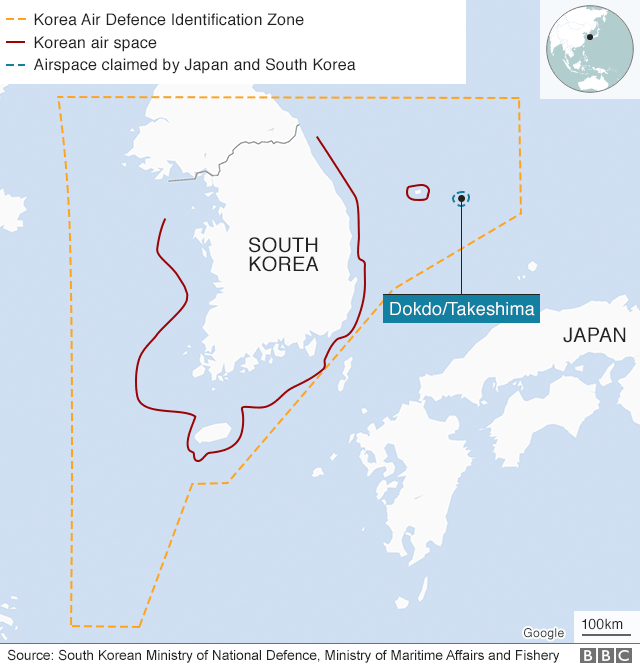
The alleged incursion happened over the disputed Dokdo/Takeshima islands, which are occupied by South Korea but also claimed by Japan.
Russian and Chinese bombers and reconnaissance planes have occasionally entered the zone in recent years, but this is the first incident of its kind between Russia and South Korea.
What does Moscow say?
The defence ministry said two of its Tu-95MS strategic missile-carriers had joined two Chinese Hong-6K strategic bombers on the pre-planned route over "neutral waters".
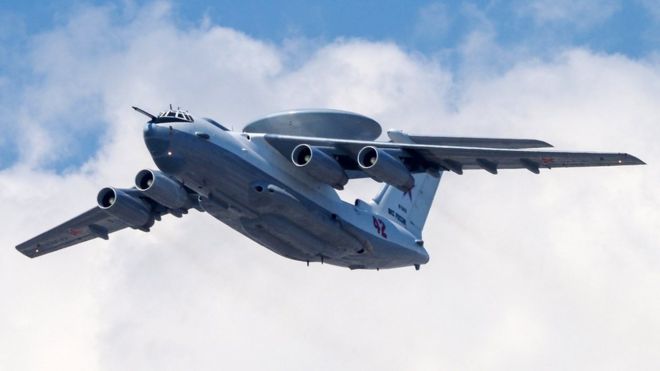
They were supported by fighters and A-50 and Kongjing-2000 airborne early warning and control aircraft.
At one point the patrol became a "single airborne formation consisting of a line of pairs of planes flying within 3-4km [around two miles] of each other", Lt-Gen Sergei Kobylash said in a televised statement.
While performing their task, he said, they were followed by foreign fighters 11 times.
He accused South Korean pilots of performing "dangerous manoeuvres" in the vicinity of disputed islands, "crossing paths with the aviation group and creating danger for the safety of the flight".
He confirmed the South Korean jets had fired decoy flares.

The patrol, he said, had been more than 25km away from the Dokdo/Takeshima islands, and he accused South Korean pilots of "hooliganism in the air".
He said Russia had complained to the South Korean military about its crews' "illegal and dangerous actions".

An alliance to give Washington nightmares

This first "joint air patrol" involving Russian and Chinese long-range aircraft in the Asia Pacific region, sends a powerful signal of the developing military relationship between Moscow and Beijing. This still falls short of a formal alliance but their joint exercises are larger and more sophisticated.
In turn this is a reflection of the ever closer economic and diplomatic ties between the two countries who, though they still have points of tension, are drawing ever closer together. They broadly share a similar world view, hostile to Western liberal democracy, eager to promote an alternative model, protective of their own national sovereignty, and often willing to ride rough-shod over that of others.
This poses a huge challenge for US strategy. The nightmare in Washington is an ever closer relationship between an assertive, but declining Russia, and a rising China, which looks set to overtake the US as a technological and economic power in the years ahead.
What does South Korea say?
South Korea's military said five aircraft had entered the Korea Air Defense Identification Zone (KADIZ) at around 09:00 local time (00:00 GMT) on Tuesday.
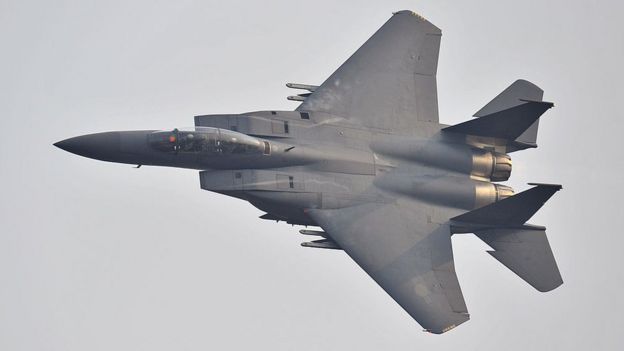
South Korean F-15 and F-16 planes were deployed to intercept them.
 GETTY IMAGES
The military said it had fired 10 flares and 80 machine-gun rounds during the alleged first violation.
It said a Russian A-50 plane had left and then re-entered the KADIZ - to be met by 10 more South Korean flares and 280 machine-gun rounds.
The head of South Korea's National Security Office, Chung Eui-yong, has lodged a strong objection with the Security Council of Russia, and asked the council to take appropriate action.
"We take a very grave view of this situation and, if it is repeated, we will take even stronger action," the South Korean president's office quoted Mr Chung as saying.
China has insisted South Korea's air defence identification zone is not territorial airspace and so all countries can move within it.
And how about Japan?
The government in Tokyo has lodged a complaint against both Russia and South Korea.
Because it claims sovereignty over the islands, Japan's government said that Russia had violated its airspace. It also said that South Korea's response had been extremely regrettable.
Chief Cabinet Secretary Yoshihide Suga said: "In light of Japan's stance regarding sovereignty over Takeshima, the South Korean military aircraft's having carried out warning shots is totally unacceptable and extremely regrettable."
Dokdo/Takeshima
- Known as Dokdo (Solitary islands) in Korea, Takeshima (Bamboo islands) in Japan
- Claimed by Japan and South Korea, but occupied by South Korea since 1954
- Just 230,000 sq m in size
What are these defence zones?
An air defence identification zone (ADIZ) is an airspace which a country seeks to monitor on grounds of national security. Overseas aircraft should identify themselves before entering an air defence zone.
An ADIZ usually extends well beyond national airspace to allow for sufficient warning of a potential threat.
But ADIZs are not governed by international law and the self-defined boundaries can be disputed or overlap with other countries' claims, which may lead to violations. This is the case in the East China Sea region, where South Korea, China and Japan all have overlapping ADIZs.
Meanwhile, under UN conventions, countries control airspace above their territory and territorial waters (up to 12 nautical miles from the coast).
In this case, South Korea says Russia went beyond its ADIZ and into the territorial
Russia-China 'joint air patrol' sees Japan and South Korea scramble jets
GETTY IMAGESRussia says it has carried out its first ever joint air patrol with China, prompting both South Korea and Japan to send jets in response.
The defence ministry says four bombers, supported by fighter jets, patrolled a pre-planned route over the Sea of Japan and the East China Sea.
South Korea says its jets fired flares and machine-gun warning shots when Russian planes intruded.
Japan has protested both to Russia and South Korea over the incident.
The alleged incursion happened over the disputed Dokdo/Takeshima islands, which are occupied by South Korea but also claimed by Japan.
Russian and Chinese bombers and reconnaissance planes have occasionally entered the zone in recent years, but this is the first incident of its kind between Russia and South Korea.
What does Moscow say?
The defence ministry said two of its Tu-95MS strategic missile-carriers had joined two Chinese Hong-6K strategic bombers on the pre-planned route over "neutral waters".
They were supported by fighters and A-50 and Kongjing-2000 airborne early warning and control aircraft.
At one point the patrol became a "single airborne formation consisting of a line of pairs of planes flying within 3-4km [around two miles] of each other", Lt-Gen Sergei Kobylash said in a televised statement.
While performing their task, he said, they were followed by foreign fighters 11 times.
He accused South Korean pilots of performing "dangerous manoeuvres" in the vicinity of disputed islands, "crossing paths with the aviation group and creating danger for the safety of the flight".
He confirmed the South Korean jets had fired decoy flares.
The patrol, he said, had been more than 25km away from the Dokdo/Takeshima islands, and he accused South Korean pilots of "hooliganism in the air".
He said Russia had complained to the South Korean military about its crews' "illegal and dangerous actions".
An alliance to give Washington nightmares
This first "joint air patrol" involving Russian and Chinese long-range aircraft in the Asia Pacific region, sends a powerful signal of the developing military relationship between Moscow and Beijing. This still falls short of a formal alliance but their joint exercises are larger and more sophisticated.
In turn this is a reflection of the ever closer economic and diplomatic ties between the two countries who, though they still have points of tension, are drawing ever closer together. They broadly share a similar world view, hostile to Western liberal democracy, eager to promote an alternative model, protective of their own national sovereignty, and often willing to ride rough-shod over that of others.
This poses a huge challenge for US strategy. The nightmare in Washington is an ever closer relationship between an assertive, but declining Russia, and a rising China, which looks set to overtake the US as a technological and economic power in the years ahead.
What does South Korea say?
South Korea's military said five aircraft had entered the Korea Air Defense Identification Zone (KADIZ) at around 09:00 local time (00:00 GMT) on Tuesday.
South Korean F-15 and F-16 planes were deployed to intercept them.
GETTY IMAGESThe military said it had fired 10 flares and 80 machine-gun rounds during the alleged first violation.
It said a Russian A-50 plane had left and then re-entered the KADIZ - to be met by 10 more South Korean flares and 280 machine-gun rounds.
The head of South Korea's National Security Office, Chung Eui-yong, has lodged a strong objection with the Security Council of Russia, and asked the council to take appropriate action.
"We take a very grave view of this situation and, if it is repeated, we will take even stronger action," the South Korean president's office quoted Mr Chung as saying.
China has insisted South Korea's air defence identification zone is not territorial airspace and so all countries can move within it.
And how about Japan?
The government in Tokyo has lodged a complaint against both Russia and South Korea.
Because it claims sovereignty over the islands, Japan's government said that Russia had violated its airspace. It also said that South Korea's response had been extremely regrettable.
Chief Cabinet Secretary Yoshihide Suga said: "In light of Japan's stance regarding sovereignty over Takeshima, the South Korean military aircraft's having carried out warning shots is totally unacceptable and extremely regrettable."
Dokdo/Takeshima
- Known as Dokdo (Solitary islands) in Korea, Takeshima (Bamboo islands) in Japan
- Claimed by Japan and South Korea, but occupied by South Korea since 1954
- Just 230,000 sq m in size
What are these defence zones?
An air defence identification zone (ADIZ) is an airspace which a country seeks to monitor on grounds of national security. Overseas aircraft should identify themselves before entering an air defence zone.
An ADIZ usually extends well beyond national airspace to allow for sufficient warning of a potential threat.
But ADIZs are not governed by international law and the self-defined boundaries can be disputed or overlap with other countries' claims, which may lead to violations. This is the case in the East China Sea region, where South Korea, China and Japan all have overlapping ADIZs.
Meanwhile, under UN conventions, countries control airspace above their territory and territorial waters (up to 12 nautical miles from the coast).
In this case, South Korea says Russia went beyond its ADIZ and into the territorial
sumber : bbc
sumber : bbc